
Automate 2026 vs. World Cup Mania: Is Your Warehouse Strategy Playing the Wrong Game?

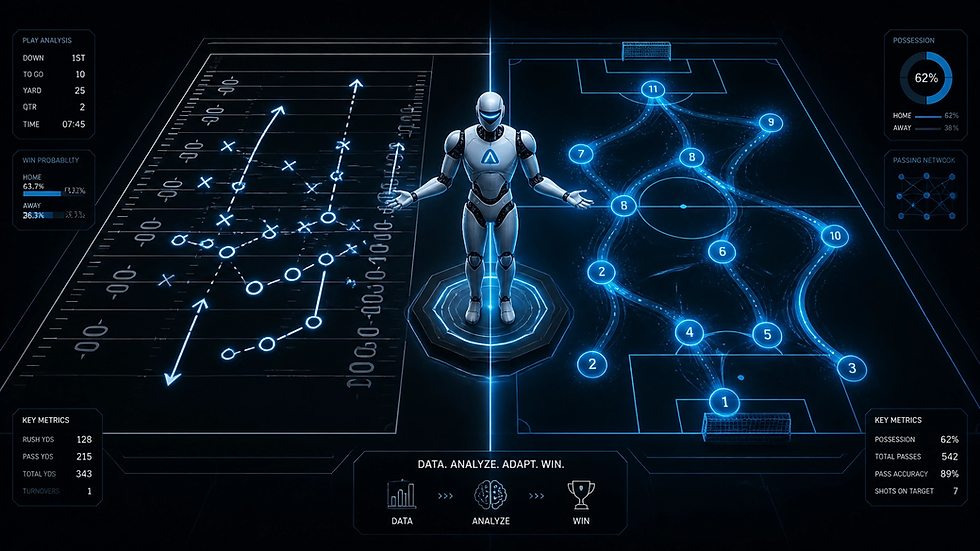
I’m on the road to Chicago for Automate 2026, and the closer I get, the more the World Cup noise keeps finding me. Hotel lobbies. Bars. Gas station TVs. I even saw a video of a crowd singing “Country Roads” at a watch party. I had no idea that was a soccer anthem. For the record... its called Soccer not Football.
That windshield time has me thinking about how we build warehouses.
A lot of the people heading to Chicago are still shopping for an American football playbook for a soccer game.
And that’s where alignment gets lost.
Alignment Starts With the Game
I like to ask people: are we playing American football or soccer?
Both are on grass. Both have 11 players. Both involve a ball. That’s about where the similarity ends.
American football is built on razor-thin margins. You line up. You call the play. Everybody has one job at one exact moment.
Timing is everything. A ball thrown an inch behind or ahead means the receiver misses it. A block that lands a beat late gets the quarterback crushed. A hit that's too low turns into a penalty. And if the play doesn’t account for a deceptively mobile QB, you give up points fast.
That’s how a lot of traditional automation systems get built.
You spend millions on a playbook that works perfectly on paper. The route is mapped. The timing is set. The sequence looks great in the meeting.
Then one sensor is a millisecond off. One upstream delay hits. One SKU changes. One labor variable shifts. And the whole system coughs.
That’s the problem with rigid plans. They can be precise without being aligned.
But a rigid plan is not the same thing as alignment.
Real alignment starts with the end in mind. What does "right" actually look like for your business?
Is it fewer touches? Better throughput? Less dependence on hard-to-find labor? Cleaner aisles? More storage density with an ASRS? Better movement across the floor with AMRs?
If you don’t define the win, you end up building a giant American football system around a goal nobody agreed on.
And when the day changes, the play dies.

Why Flow Matters Now
Soccer has a goal too. Put the ball in the net.
But the path changes. Constantly.
That’s the part people miss. Flow is not chaos. It’s alignment around the outcome with freedom to adjust the path.
That’s why this matters so much right now.
Older automation had to be more rigid because the tech was more rigid. If the conveyor was fixed, the route was fixed. If the system was hard-coded, the process was hard-coded. Once it was in, you lived with it.
That’s not the world we’re in now.
Soccer works differently. The goal stays the same, but the players adjust in real time. They recover. They reposition. They keep play moving.
Now the tech can do more of that too.
It allows for water breaks. Adjustments. Halftime conversations. You can pause, learn something, and change the shape of the play without tearing out the whole field.
A late pallet doesn’t have to crash the system. A shift in labor doesn’t have to kill throughput. A new product mix doesn’t have to send your ROI up in smoke.
That’s what flexible automation is supposed to do.
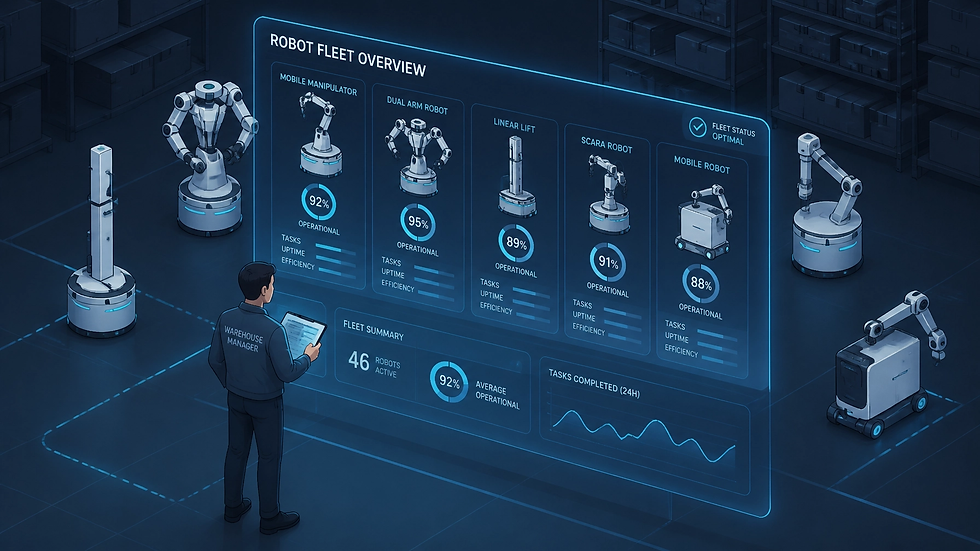
You can redeploy AMRs. You can scale ASRS. You can add tracking technology for better visibility and flow. You can make changes as the business changes.
That is soccer.
Not random. Not loose. Just aligned on the goal, with room to move.

Making Right Look Right for You
This is the last step, and it’s the one that matters most.
Make right look right for you.
Not for your competitor. Not for a brochure. Not for the guy trying to sell you a giant "transformation project."
For you.
Maybe "right" means fewer missed shipments. Maybe it means cleaner floors without pulling people off other work. Maybe it means better storage density. Maybe it means moving material faster without locking yourself into a system you’ll outgrow in two years.
That’s alignment.
Once the goal is clear, the equipment gets easier to choose. The workflow gets easier to design. The next step gets easier to see.
See You in Chicago
I’m headed to McCormick Place for Automate 2026.
By the time this goes live, I’ll still be on the road. More windshield time. More soccer on random screens. More time thinking about what alignment actually means before the doors open.
If you’ll be in Chicago and want to talk about what "right" looks like for your facility, let’s grab a coffee.
We don't do "projects." We help you:
Clean stuff. (Autonomous floor scrubbing)
Move stuff. (AMRs and Pick Assist Robots)
Store stuff. (Scalable ASRS)
Track stuff. (Real-time material flow)
No jargon. Just wins.
If you’ll be there, let’s make sure right looks right for you.


Comments